Choosing the best espresso machine for commercial use is not the same decision as buying a high-end machine for a residential kitchen. In a business environment, the machine is part of your revenue infrastructure. It affects ticket speed, drink consistency, staff workflow, maintenance costs, and customer satisfaction.
For a small café, bakery, salon, office, catering operator, or low-volume hospitality business, the wrong machine can create expensive problems: slow recovery during peak demand, inconsistent drinks between staff members, premature pump or boiler failure, warranty issues, or complete downtime during revenue hours.
This guide is designed for small and low-to-moderate volume commercial environments, not high-volume specialty coffee shops pulling hundreds of shots per hour. The focus is on machines that can support practical business use cases such as:
- Small cafés and bakeries
- Low-volume restaurants
- Catering businesses
- Offices and self-serve coffee stations
- Salons, insurance offices, clinics, and hospitality waiting areas
- Small businesses serving staff or clients
After real-world evaluation, we identified four standout espresso machines that perform exceptionally well in low-to-moderate volume businesses.
| Best for small café and bakeries | Best Budget for low-volume catering | Best for office and self-serve stations | Best for small businesses serving clients |
| Nuova Simonelli Appia Volumetric 1 Group | Rancilio Silvia Pro X | Jura W8 Professional | Breville Barista Express Impress |
 |
 |
 |
 |
Below, we compare the best options by workflow throughput, durability, plumbing requirements, electrical needs, maintenance burden, and business suitability.
What Is a Commercial Espresso Machine?
A commercial espresso machine is designed to operate under a higher duty cycle than a residential espresso machine. In practical terms, this means it can handle repeated brewing, steaming, cleaning, and recovery cycles throughout the business day without excessive thermal instability or mechanical stress.
A true commercial unit usually differs from a home machine in several critical ways.
Higher Daily Output Capacity
Residential machines are typically built for a few drinks per day. Commercial machines are engineered for repeated use across service windows. A café or bakery may need to produce 50, 100, or 150 drinks per day, often concentrated during morning rush periods.
A machine that performs well for two cappuccinos at home may struggle when asked to produce 20 milk drinks in 30 minutes.
Larger Boilers and Better Thermal Recovery
Commercial espresso production requires stable brew temperature and steam pressure. Larger boilers, heat exchanger systems, or dual boiler designs allow the machine to recover quickly after consecutive drinks.
Recovery time matters because each drink removes heat and pressure from the system. If the machine cannot recover fast enough, drink quality and service speed decline.
Direct Water Line and Drainage Options
Many commercial semi-automatic espresso machine models connect directly to a cold water supply and drain line. This reduces manual refilling, supports longer service periods, and helps maintain consistent water pressure.
Reservoir-based machines can be acceptable for offices, mobile catering, or very low-volume businesses, but they are operationally limiting in café-style service.
NSF, UL, and Food Safety Certifications
Commercial buyers should pay close attention to certifications.
- NSF certification indicates that the machine meets sanitation and food safety standards relevant to commercial foodservice environments.
- UL certification relates to electrical safety.
- Local health departments, landlords, insurers, or franchise agreements may require certified equipment.
Not every machine marketed for “commercial-style” use is certified for commercial foodservice. This distinction is especially important for cafés, restaurants, bakeries, and public-facing beverage service.
Electrical Requirements: 110V vs. 220V
Many compact machines operate on standard 110V/120V outlets. This is convenient for offices, salons, and catering operators.
However, higher-output commercial machines often require 220V service. A 220V configuration allows faster heating, stronger steaming performance, and better boiler recovery, but it may require an electrician and dedicated circuit.
From a business perspective, electrical requirements should be evaluated before purchase. Installation costs can affect total ROI.
How We Chose the Best Commercial Espresso Machines
For this guide, we focused on machines suitable for small business and low-volume commercial environments. The selection criteria prioritize business performance rather than home barista preferences.
Daily Output Capacity
We considered how many drinks each machine can realistically support per day. A café serving 100+ drinks has different needs from an office serving 20 employees.
Heat-Up and Recovery Time
Commercial environments depend on recovery speed. The machine must maintain brewing temperature and steam pressure during repeated use, especially during morning or lunch rush periods.
Durability and Duty Cycle
A machine used commercially experiences more stress than a home machine. Pumps, boilers, valves, steam wands, grinders, and control systems must withstand frequent operation.
Workflow and Usability
We assessed how easily staff can operate the machine. Volumetric dosing, automated milk functions, programmable settings, and intuitive interfaces reduce training time and improve consistency.
Maintenance Costs
Maintenance is a direct operating expense. We considered backflushing, descaling, water filtration, grinder cleaning, milk system cleaning, and component accessibility.
Business Suitability
Not every machine is appropriate for every environment. Some machines are legitimate café equipment, while others are better for offices, client waiting areas, or very low-volume commercial use.
How to Choose a Commercial Espresso Machine
Before comparing machines, calculate your business requirements.
The best commercial espresso machine for small business use is the one that matches your cup volume, staffing model, installation constraints, and beverage menu.
Type of Machine: Volumetric vs. Semi-Automatic vs. Super-Automatic
Volumetric Espresso Machines
A volumetric espresso machine dispenses a programmed amount of water for each shot. This is valuable in commercial settings because it improves consistency between operators.
For cafés and bakeries, volumetric dosing reduces training time and helps maintain shot consistency during high-speed workflows.
Best for:
- Small cafés
- Bakeries
- Restaurants
- Coffee counters with trained staff
Semi-Automatic Espresso Machines
Semi-automatic machines require the operator to start and stop extraction manually or manage more of the brewing process. They can produce excellent espresso but require more staff skill and supervision.
Best for:
- Catering operators
- Low-volume coffee service
- Businesses with trained users
- Environments where cost control is important
Super-Automatic Espresso Machines
A super-automatic machine grinds, doses, tamps, brews, and often froths milk automatically. These machines are ideal when consistency and low labor input are more important than barista control.
Best for:
- Offices
- Self-serve stations
- Waiting rooms
- Hotels
- Low-staff hospitality environments
While specialty cafes require manual interaction, corporate environments benefit from true bean-to-cup automation that requires zero barista training. For these self-serve settings, discover the best fully automated espresso machines for offices and breakrooms.
Size and Capacity: Match the Machine to Foot Traffic
To calculate daily cup volume, estimate the number of espresso-based drinks your business expects to serve per day.
Use this simple framework:
1. Estimate daily visitors or employees.
Example: 80 bakery customers per day.
2. Estimate beverage attachment rate.
Example: 25% buy coffee.
3. Estimate espresso-based drink percentage.
Example: 70% of coffee orders are espresso drinks.
4. Calculate daily espresso drink volume.
80 × 25% × 70% = 14 espresso drinks per day.
For a café, the numbers may be much higher:
- 200 customers per day
- 40% beverage attachment
- 80% espresso drinks
- = 64 espresso drinks per day
Then consider peak-hour concentration. A machine that can handle 60 drinks across a full day may still fail if 40 of those drinks occur between 8:00 and 9:30 a.m.
Water Requirements: Plumbing and Filtration
Water quality is one of the most important commercial espresso machine variables.
For plumbed machines, you typically need:
- Cold water supply connection
- Pressure regulation if water pressure is too high
- Drain line or drain tray solution
- Commercial water filtration
- Water softening or scale reduction system
Using unconditioned water is a major business risk. Hard water causes scale buildup inside boilers, valves, flow meters, and heating elements. In many cases, operating without proper filtration or softening can void the manufacturer’s warranty.
At minimum, commercial users should install:
- Sediment filtration
- Carbon filtration for taste and chlorine reduction
- Scale inhibition or softening based on local hardness
- Scheduled filter replacement
Unlike a home-use espresso machine, you cannot simply unbox a commercial unit and plug it into a standard wall outlet. To ensure a smooth installation and avoid accidental damage, read our step-by-step breakdown how to install a commercial espresso machine.
Electrical Needs: 110V vs. 220V
UA standard 110V/120V outlet is convenient, but it limits power output. Machines on standard power may have slower recovery, weaker steam capacity, or smaller boilers.
A 220V commercial espresso machine can usually support:
- Faster heat-up
- Better steam pressure
- Stronger recovery under load
- Higher service throughput
Before purchasing, confirm:
- Voltage
- Amperage
- Plug type
- Dedicated circuit requirements
- Local code requirements
- Installation cost
For small cafés, upgrading electrical service may be worthwhile. For offices and salons, a 110V machine may be more practical.
Before purchasing, confirm your venue’s voltage, amperage, plug type, and dedicated circuit requirements. Verifying your building’s electrical infrastructure before purchasing commercial equipment is mandatory to avoid blowing a fuse. For a deeper breakdown of your building’s layout, read our comprehensive guide on the critical difference between 110V vs 220V commercial espresso machine voltage requirements to determine if you need to hire an electrician.
Comparison of the Best Espresso Machines for Commercial Use
| Machine | Image | Best For | Boiler / Water Capacity | Group Heads | Power | Price |
| Nuova Simonelli Appia Volumetric 1 Group | |
Small cafés, bakeries, restaurants | Commercial boiler, configuration varies; 150 cups/day | 1 | 110V or 220V depending on configuration | |
| Rancilio Silvia Pro X | |
Low-volume catering | 1L steam boiler / dual boiler platform | 1 | 110V/120V | |
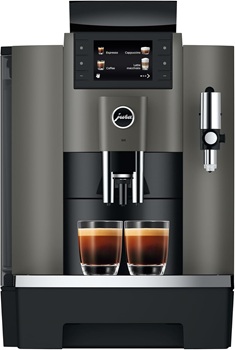
| Jura W8 Automatic Coffee Machine | 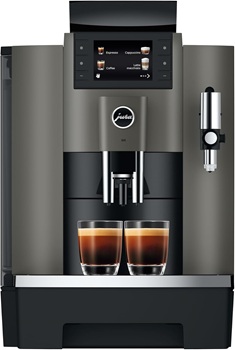 |
Offices, self-serve environments | 101 fl oz water reservoir | Internal brew unit | 120V | |
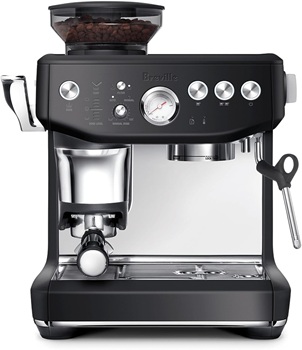
| Breville Barista Express Impress BES876BTR | |
low-volume client service | 2L water tank | 1 | 120V |
Nuova Simonelli Appia Volumetric 1 Group Espresso Machine – Best Overall for Small Cafés and Restaurants
Quick Specs
| Specification | Details |
| Boiler Capacity | Commercial boiler; exact size varies by Appia version/configuration |
| Daily Capacity | Approximately up to 150 cups, depending on workflow and drink mix |
| Group Head Count | 1 |
| Water Connection | Hooks up to cold water supply; supplied with flexible hose for drainage |
| Power Requirements | Varies by model; confirm 110V vs. 220V before purchase |
| Special Feature | Soft Infusion System, volumetric dosing, Cool Touch steam wands |
| Best Suited For | Small cafés, bakeries, restaurants, coffee counters, and low-to-moderate traffic hospitality businesses |
Commercial Deep Dive
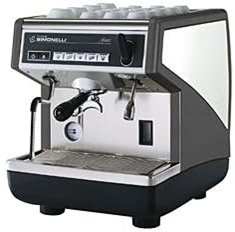
The Nuova Simonelli Appia Volumetric 1 Group is the strongest choice in this list for businesses that need a genuine commercial espresso workflow. Unlike reservoir-based prosumer machines, the Appia is designed for repetitive service, direct plumbing, staff operation, and consistent shot production.
Its core commercial advantage is volumetric dosing. Staff can program shot volumes and activate extraction with less manual timing. In a small café or bakery, this improves drink consistency and reduces dependency on highly experienced baristas.
The Soft Infusion System is another important business feature. SIS promotes more uniform water saturation across the coffee puck at the beginning of extraction. In a fast-paced environment, where tamping consistency may vary between staff members, soft infusion helps reduce channeling and improves extraction stability.
From a workflow perspective, the Appia’s single-group configuration is appropriate for businesses that need quality commercial service without the footprint or cost of a two-group machine. A one-group machine can be ideal for a bakery, restaurant, boutique café, or mobile-style coffee counter where espresso is important but not the only revenue driver.
The machine’s commercial steam performance is a significant advantage over smaller home-style machines. Milk drink production is often the true bottleneck in low-volume cafés. A machine may pull acceptable espresso shots but fail operationally if it cannot steam milk repeatedly. The Appia is built to handle repeated steaming more effectively than compact reservoir machines.
The Cool Touch steam wand also supports safer and cleaner operation. In commercial service, milk residue on steam wands can quickly become a sanitation issue. A cooler external wand surface reduces milk burn-on and makes wipe-down easier between drinks.
Because this machine connects to a cold water supply and includes drainage support, it is better suited to fixed installations than pop-up catering. Plumbing reduces refill interruptions and improves uptime during service.
Pros
- True commercial workflow suitable for small cafés, bakeries, and restaurants
- Volumetric dosing improves consistency and staff efficiency
- Soft Infusion System helps compensate for minor puck preparation variability
- Direct water connection supports uninterrupted service
- Cool Touch steam wand improves cleaning efficiency and operator safety
- Better boiler recovery and steam performance than compact home-style machines
Cons
- Installation may require plumbing, drainage, and possibly electrical work
- Higher upfront cost than prosumer or office machines
- One group head limits throughput for busier cafés
- Requires commercial water filtration and routine maintenance
- Buyers must verify voltage, certification, and configuration before purchase
Ideal Business Environment
The Nuova Simonelli Appia Volumetric 1 Group (view on Amazon) is the best choice for businesses that sell espresso-based drinks to customers and need a reliable commercial semi-automatic espresso machine. It fits small cafés, bakeries, boutique restaurants, and hospitality counters producing steady but not extreme volume.
You might like to read: our comparison of the 3 popular Nuovo Simonelli espresso machines: Nuova Simonelli Oscar II vs. Musica vs. Appia II.
Rancilio Silvia Pro X Espresso Machine – Best Budget for Low-Volume Catering
Quick Specs
| Specification | Details |
| Boiler Capacity | 1L steam boiler platform; dual boiler design |
| Group Head Count | 1 |
| Water Source | Reservoir-based |
| Power Requirements | Typically 110V/120V |
| Dimensions | 16.5″D x 10″W x 15.2″H |
| Special Feature | 4-inch cup clearance, cup warmer, pre-infusion, approximately 15-minute warm-up |
| Best Suited For | Low-volume catering, staff coffee service, small mobile setups, controlled-use environments |
Commercial Deep Dive
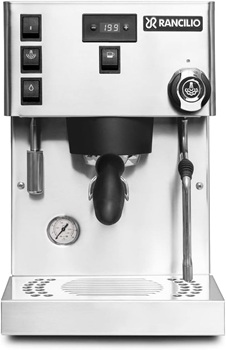
The Rancilio Silvia Pro X is not a full commercial café machine in the same category as the Nuova Simonelli Appia. However, it can make sense for very low-volume commercial use where budget, portability, and standard electrical requirements are major constraints.
Its dual boiler architecture gives it an important advantage over single-boiler home machines. Separate brewing and steaming systems allow better temperature management and more efficient drink preparation. For a catering operator producing a limited number of espresso drinks at a private event, this can be a practical compromise.
The approximate 15-minute warm-up time is operationally manageable for scheduled service. Catering businesses can power the machine before the event starts and avoid delays once guests arrive. However, this is not a machine for continuous café rush volume.
The 4-inch cup clearance supports common espresso and small milk beverage cups, though larger takeaway cups may require transferring drinks or using smaller vessels during preparation. The cup warmer helps stabilize serving temperature, which can be useful in event environments.
Because the Silvia Pro X is reservoir-based, it does not require plumbing. This is an advantage for low-volume catering, office kitchens, and mobile setups. However, it also introduces workflow limitations. Staff must monitor water level, refill the tank, and manage wastewater.
Maintenance is more hands-on than with many commercial units. Operators need to backflush, clean the group, purge and wipe the steam wand, descale according to water conditions, and maintain grinder cleanliness if using a separate grinder.
For business use, the Silvia Pro X should be treated as a controlled-duty machine. It can support small-scale paid service, but it is not ideal for a public café with unpredictable foot traffic.
Pros
- Lower upfront cost than true commercial machines
- Dual boiler design improves brew and steam workflow
- Runs on standard electrical service in most configurations
- Compact footprint for catering and small counters
- Reservoir operation avoids plumbing requirements
- Pre-infusion supports more stable extraction
Cons
- Not ideal for sustained café rush periods
- Reservoir refilling slows workflow
- Limited cup clearance for larger commercial drink formats
- Requires skilled operation and separate grinder
- May not meet all commercial certification requirements
- Lower duty cycle than true commercial café equipment
Ideal Business Environment
The Rancilio Silvia Pro X (view on Amazon) is best for low-volume catering operators, small office kitchens, and controlled-use environments where espresso is offered occasionally rather than continuously. It is a budget-conscious option, not a replacement for a heavy duty coffee maker for cafe use in a high-traffic location.
Jura W8 Automatic Coffee Machine – Best Super-Automatic for Self-Serve and Offices
Quick Specs
| Specification | Details |
| Water Capacity | 101 fl. oz reservoir |
| Brew System | Eighth-generation brew unit with 3D Brewing Technology |
| Group Head Count | Internal automated brew system |
| Power Requirements | Typically 120V |
| Dimensions | 17.6″D x 11.6″W x 17.4″H |
| Special Feature | Pulse Extraction Process, One-Touch Americano, milk specialty function, Intelligent Preheating, Coffee Eye |
| Best Suited For | Offices, self-serve stations, waiting areas, executive suites, small hospitality environments |
Commercial Deep Dive
The Jura W8 is designed for environments where automation, consistency, and low training requirements are more important than manual barista control. For office procurement managers, this type of machine can offer strong operational value because it reduces labor involvement.
The key business benefit is one-touch beverage production. Employees or guests can prepare espresso, coffee, Americano-style drinks, and milk beverages without barista training. This makes the W8 especially suitable for offices, professional service firms, salons, clinics, and client waiting areas.
Jura’s Pulse Extraction Process controls water flow through the coffee during extraction to improve consistency in short beverages. The **eighth-generation brew unit with 3D Brewing Technology** is designed to improve water distribution through the coffee bed. From a business standpoint, these technologies reduce variability between users.
The Intelligent Preheating feature helps maintain temperature consistency, which is important when drinks are made sporadically throughout the day. Unlike a café rush environment, office use often involves irregular demand: one drink at 8:15, three at 10:00, another at 1:30. Preheating helps reduce quality variation between cycles.
The Coffee Eye feature improves interface accuracy by detecting cup placement and adapting the beverage selection display. This is useful in self-serve environments where users may not read instructions carefully.
However, the W8 is not a traditional commercial espresso machine. It does not provide the same open barista workflow, steam wand control, or serviceability as a commercial semi-automatic. It also depends heavily on internal cleaning programs, milk system hygiene, and proper user compliance.
For offices, the maintenance model must be assigned clearly. Someone needs to empty grounds, refill water, clean the milk system, replace filters, and run cleaning cycles. If ownership is unclear, super-automatic machines can become hygiene and reliability liabilities.
Pros
- Excellent for self-serve office and waiting-room environments
- Minimal staff training required
- One-touch beverage production improves convenience
- Strong automation for espresso, Americano, and milk drinks
- Intelligent preheating supports consistency during intermittent use
- Compact footprint relative to café equipment
Cons
- Not suitable for high-volume café production
- Reservoir capacity limits heavy use
- Milk system requires strict cleaning discipline
- Less serviceable than traditional commercial machines
- Not ideal when barista control or latte art workflow is required
- Internal grinder and brew unit require ongoing maintenance
Ideal Business Environment
The Jura W8 Professional Fully Automatic Espresso Machine (view on Amazon) is the best option for offices, self-serve stations, executive lounges, and professional environments where coffee is an amenity rather than a primary revenue product. It is a strong choice for businesses that want consistent drinks without hiring or training baristas.
Breville Barista Express Impress Espresso Machine BES876BTR – Best Commercial-Grade Option for Very Low-Volume Business Use
Quick Specs
| Specification | Details |
| Water Capacity | 2L reservoir |
| Group Head Count | 1 |
| Grinder | Integrated coffee grinder |
| Power Requirements | Typically 120V |
| Dimensions | 12.5″D x 14.5″W x 16.5″H |
| Special Feature | Integrated grinder, milk frother, programmable settings, assisted tamping |
| Best Suited For | Salons, insurance offices, small offices, client hospitality areas with up to approximately 5 regular users |
Commercial Deep Dive
The Breville Barista Express Impress is best understood as a high-convenience, low-volume business machine rather than a true commercial espresso machine. It is not the correct choice for a café, bakery, or restaurant selling espresso drinks throughout the day. However, it can fit very small commercial environments where espresso is a client amenity or staff perk.
The main business advantage is integration. The built-in grinder, assisted tamping system, and programmable functions reduce the number of separate components required. For a salon, small office, or insurance agency, this matters because counter space and staff training are limited.
The assisted tamping system helps standardize puck preparation. In a business where multiple employees may use the machine casually, this can reduce mess and inconsistency. It does not eliminate the need for basic training, but it lowers the barrier compared with traditional grinder-and-machine setups.
The 2L water tank is suitable for light use but creates a clear operational limit. In a business serving several clients or employees per day, someone must monitor water level and drip tray capacity. This machine should not be placed in an unattended high-traffic area.
The integrated grinder is convenient, but it also creates a maintenance dependency. If the grinder has issues, the entire beverage station is affected. For a café, a separate commercial grinder is usually preferred because it offers better duty cycle, serviceability, and workflow flexibility.
Milk steaming is manual. This is acceptable for occasional cappuccinos or lattes but not for repeated commercial milk drink production. The machine is best used where espresso and simple milk drinks are offered in low quantities.
Pros
- Integrated grinder reduces equipment footprint
- Assisted tamping improves consistency for casual users
- Standard electrical requirements simplify installation
- Programmable features support repeatable preparation
- Good fit for small offices, salons, and client hospitality
- Lower cost than commercial café machines
Cons
- Not a true commercial café machine
- Reservoir-based workflow limits throughput
- Integrated grinder is not ideal for high-duty commercial service
- Manual milk steaming slows drink production
- Not appropriate for businesses selling large volumes of espresso drinks
- May not satisfy commercial foodservice certification requirements
Ideal Business Environment
The Breville Barista Express Impress (view on Amazon) is best for very low-volume commercial-adjacent use: salons, small offices, insurance agencies, boutique retail counters, or client waiting areas with up to approximately five regular users. It is not recommended as the primary espresso machine for a café or bakery.
Commercial Espresso Machine Setup and Maintenance Essentials
Buying the machine is only part of the decision. Installation and maintenance determine whether the machine delivers long-term ROI.
Install Proper Water Filtration and Softening
Water treatment is mandatory for commercial espresso operations. Hard water creates scale inside boilers, valves, flow meters, and heating elements. Scale reduces heat transfer, restricts flow, damages components, and increases service costs.
Most manufacturers expect commercial users to operate with properly conditioned water. Using unconditioned water can void the warranty.
Before installation, test your water for:
- Hardness
- Alkalinity
- Chlorine
- Total dissolved solids
- Sediment
- pH
Then install the correct combination of filtration, softening, or scale inhibition.
Plan for Drainage
Plumbed machines need a drainage solution. Some machines include flexible drain hoses, but the installation must still meet local code and practical workflow requirements.
Poor drainage creates sanitation issues, leaks, and staff frustration.
Backflush Daily in Café Environments
Commercial espresso machines should be backflushed regularly. For businesses selling drinks daily, backflushing with water should be part of the closing routine, and detergent backflushing should follow manufacturer recommendations.
Daily cleaning should include:
- Group head flushing
- Portafilter and basket cleaning
- Steam wand purging and wiping
- Drip tray cleaning
- Grinder brushing
- Counter and knock box sanitation
Neglecting your group heads leads to bitter-tasting shots and premature component failure. To keep your machine running smoothly all year long, download and print our Commercial Espresso Machine Maintenance Checklist.
Assign Maintenance Responsibility
In offices and self-serve environments, maintenance often fails because no one owns the task. Assign responsibility for:
- Refilling water
- Emptying grounds
- Cleaning milk systems
- Replacing filters
- Running cleaning cycles
- Scheduling service
A machine without an assigned maintenance owner will become unreliable quickly.
Budget for Service Costs
Commercial buyers should include maintenance in ROI calculations. Budget for:
- Water filters
- Cleaning tablets or detergent
- Group gaskets
- Shower screens
- Grinder burrs
- Technician visits
- Downtime contingency
The cheapest machine is not always the lowest-cost machine over three years.
Frequently Asked Questions
What Is the Difference Between a Heat Exchanger and a Dual Boiler?
A heat exchanger machine uses one main boiler to support steaming while brew water passes through a separate internal tube or circuit. This allows brewing and steaming at the same time while maintaining a more compact design.
A dual boiler machine has separate boilers for brewing and steaming. This provides more precise temperature control and can improve workflow consistency.
For commercial use, both systems can work well. The right choice depends on volume, budget, electrical capacity, and service requirements.
Do I Need a Direct Water Line Connection?
You need a direct water line if your business serves espresso drinks regularly throughout the day. Direct plumbing reduces refill interruptions, stabilizes workflow, and supports higher output.
Reservoir machines can work for:
- Offices
- Catering
- Salons
- Waiting rooms
- Very low-volume service
For cafés, bakeries, and restaurants, a plumbed machine is usually the better business decision.
What Is NSF Certification and Why Does It Matter?
NSF certification indicates that equipment meets recognized sanitation and food safety standards for commercial environments. This can matter for health inspections, insurance requirements, lease agreements, and public foodservice compliance.
If you operate a café, restaurant, bakery, or any public-facing foodservice business, verify certification before purchase. Do not assume that a “commercial-style” machine is certified for commercial use.
What Size Espresso Machine Does a Small Café Need?
A small café with moderate espresso demand can often operate with a one-group commercial machine if drink volume is controlled and peak rush periods are manageable.
However, if your business expects sustained morning rush demand, frequent milk drinks, or more than one barista working simultaneously, a two-group machine may be more efficient.
Can an Office Use a Commercial Espresso Machine?
Yes, but many offices are better served by a super-automatic machine like the Jura W8. Traditional commercial espresso machines require trained operators, grinders, tamping, milk steaming, and daily cleaning.
For office environments, automation often delivers better compliance and lower labor friction.
Is a Home Espresso Machine Suitable for Commercial Use?
Usually not. Residential machines are not designed for commercial duty cycles, may lack foodservice certifications, and may have warranty restrictions against business use.
Some prosumer machines can work for controlled low-volume use, but they should not be treated as substitutes for true commercial café equipment.
What makes commercial espresso machines different from home espresso machines?
It is sometimes tempting to buy a commercial espresso machine for home use or to try to use a less expensive home expresso machine in a commercial environment. What is the difference? Will a home espresso machine suffice for a commercial environment at a cheaper price?
The short answer is that espresso machines are well designed for the commercial or home market segments.
Commercial espresso machines are typically designed for high volume usage by many different operators with very short cycle times. They are made with heavy duty material which will not be damaged easily. For example, commercial espresso machines are typically constructed from metal which will not be easily damaged (like plastics, for example).
A commercial espresso machine will certainly have a design goal of lasting at least 10 years—but at a price point typically close to $10,000 (ranging from $5,000 to $30,000).
Typically, commercial machines are made to be permanently connected to the water supply (providing conditioned water pre filtered) and to drainage (Commercial establishments generally will have floor drains).
Because of the need to deliver quickly with short cycle times, commercial espresso machines have higher power consumptions directly connected to 220 Volt electrical service, which is typically not available in your kitchen at home.
Importantly, commercial espresso machines are designed for long use with minimum maintenance. A commercial espresso machine should be “NSF Certified”. NSF is the National Sanitation Foundation. They are designed to be operated by multiple operators without creating a safety hazard. Typical design volumes are 100’s of drinks per day.
These commercial machines are designed for a long life—the design ife of these commercial machines is typically 10 or more years while operating at high volumes, whereas a home expresso machine might last less that a year while struggling to keep up with demand drinks.
Conversely, home machines are designed for a much lighter duty cycle but with the flexibility to provide a wide range of drinks programmatically—at the push of a button.
Since duty cycles are much lighter, so having to pour water into a reservoir does not significantly affect overall productivity.
Home machines are typically much smaller and lighter—easily fitting on a counter. They typically sell for on the order of $1,000 and frequently are designed to produce only 10% or so of the drinks produced by a commercial machine.
What machines does Starbucks use?
Many coffee aficionados ask what machines Starbucks uses. Starbuck used a machine built specifically and exclusively for Starbucks by a Swiss company (Thermoplan AG) called Mastrena. These machines are used in all Starbucks locations. They are fully computerized to support Starbuck’s menus and to maximize the productivity of each barista.
How long does a commercial espresso machine last?
- 10 Years with maintenance (home machines last 1 year in commercial environment)
- Water Filter (Plumbed in high capacity vs low volume )
How much does a commercial espresso machine cost?
- $5000-$30000
Conclusion
The best espresso machine for commercial use depends on your business model, daily cup volume, installation constraints, and staffing plan.
| Best for small café and bakeries | Best Budget for low-volume catering | Best for office and self-serve stations | Best for small businesses serving clients |
| Nuova Simonelli Appia Volumetric 1 Group | Rancilio Silvia Pro X | Jura W8 Professional | Breville Barista Express Impress |
|
|
|
|
For small cafés, bakeries, and restaurants, the Nuova Simonelli Appia Volumetric 1 Group (view on Amazon) is the strongest overall choice because it offers true commercial workflow, direct plumbing, volumetric dosing, strong steaming capability, and business-grade durability.
For low-volume catering or budget-conscious controlled use, the Rancilio Silvia Pro X (view on Amazon) offers a compact dual boiler platform, though it should not be used as a high-volume café machine.
For offices and self-serve environments, the Jura W8 Professional Fully Automatic Espresso Machine (view on Amazon) is the best super-automatic option because it reduces training requirements and supports consistent one-touch drinks.
For very small businesses such as salons, insurance offices, and client hospitality areas, the Breville Barista Express Impress (view on Amazon) can be a practical low-volume solution, provided buyers understand that it is not a true commercial foodservice machine.
Before purchasing, calculate your daily cup volume, confirm voltage and plumbing requirements, verify NSF/UL certification where required, and install proper water filtration. A commercial espresso machine is not only a beverage appliance; it is part of your operating infrastructure.
The right machine protects revenue, improves workflow throughput, and reduces the risk of costly downtime.