A commercial espresso machine is not like a home countertop appliance. It is part of your café’s utility infrastructure. Water quality, pressure, drainage, electrical supply, countertop strength, and technician access all affect daily performance. If one of these details is overlooked, you may experience slow recovery, inconsistent espresso shots, leaks, scale buildup, pump strain, or even denied warranty coverage.
This guide walks through the major plumbing and setup requirements small business owners should understand before installing a direct-connect espresso machine.
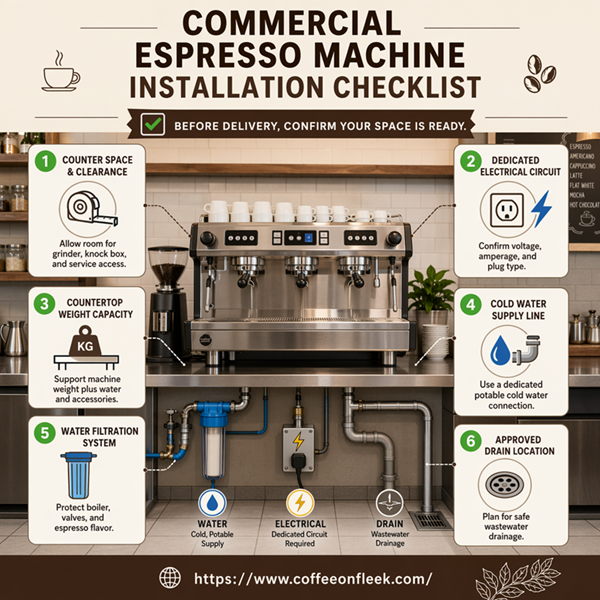
Pre-Installation Checklist for Small Businesses
Before scheduling delivery, confirm that your café space can physically and mechanically support the machine. This early checklist can prevent delays, surprise plumbing bills, and unsafe workarounds after the espresso machine arrives.
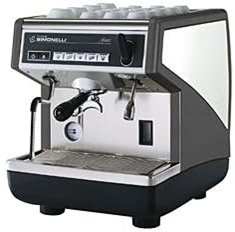
For a fixed commercial unit such as the Nuova Simonelli Appia Volumetric 1 Group, you should verify:
- Countertop space and clearance
- Electrical voltage and amperage requirements
- Dedicated cold water access
- Drain location
- Water filtration needs
- Countertop weight capacity
- Local plumbing and health code requirements
- Access for service technicians
- Budget for licensed installation
Even a compact one-group commercial machine requires a professional setup mindset. It may be smaller than a two-group or three-group café workhorse, but it still relies on the same core infrastructure: clean water in, wastewater out, stable power, and safe placement.
Assessing Your Café’s Spatial Footprint
Start by measuring the actual area where the espresso machine will sit. Do not measure only the machine’s width. You also need to account for workflow, grinder placement, knock box position, milk steaming space, cup storage, and staff movement.
A common mistake is placing the espresso machine where it technically fits but does not function well during service. Your barista needs room to move portafilters, tamp coffee, steam milk, purge the group head, and clean the station quickly.
When planning your espresso bar layout, consider:
- Machine width, depth, and height
- Clearance above the machine for cup warmers or filling access
- Space beside the machine for one or more grinders
- Room for a tamping mat or tamping station
- Knock box location
- Refrigeration access for milk
- Distance from handwashing and dishwashing areas
- Customer-facing sightlines if the machine is on display
- Technician access to side, rear, or underside panels
Leave enough room behind or below the machine for water lines, filtration tubing, drain hoses, and power cords. Tight bends in hoses can restrict flow or create hidden leak points. If the machine is pushed tightly against a wall, routine service can become more expensive because the technician must move equipment before diagnosing issues.
For a small café or bakery, the Nuova Simonelli Appia Volumetric 1 Group is often attractive because it provides commercial performance in a smaller footprint. Still, it should be treated as a fixed workstation, not a portable appliance.
Evaluating Electrical Power Specifications: 110V vs. 220V
Commercial espresso machines are available in different electrical configurations. Some one-group machines may run on 110V power, while larger or higher-output models often require 220V. The correct answer depends on the exact model, region, and manufacturer specification plate.
Before installation, check:
- Voltage requirement
- Amperage requirement
- Plug type
- Circuit type
- Whether a dedicated circuit is required
- Local electrical code rules
- Whether hardwiring is necessary
Never assume your existing outlet is sufficient because the plug “looks like it fits.” Espresso machines draw significant power to heat and maintain boiler temperature. If the electrical circuit is overloaded, you may trip breakers during peak service or create a safety hazard.
For commercial use, a dedicated circuit is strongly recommended and often required. Sharing the same circuit with grinders, refrigerators, blenders, ovens, or POS equipment can lead to unpredictable electrical issues.
If your space was previously used as an office, boutique, or bakery without espresso service, have an electrician inspect the panel before you purchase or install equipment. Upgrading power after the machine arrives can delay your opening schedule.
Also confirm whether your warranty or local code requires installation by a licensed electrician. Many manufacturers and service providers expect professional installation documentation if an electrical issue later occurs.
Verifying Countertop Weight Capacity Requirements
Commercial espresso machines are heavy, especially once filled with water. The machine’s listed shipping weight does not always reflect the operational load on your counter. You must consider the machine body, internal water volume, grinders, accessories, cups, pitchers, tampers, and staff pressure during tamping.
Before installation, ask:
- Is the countertop commercial-grade?
- Can it support the machine’s operating weight?
- Is the surface level and stable?
- Is there enough support underneath?
- Will moisture damage the countertop material?
- Is the counter height comfortable for baristas?
A weak or uneven counter can create vibration, noise, unsafe movement, and drainage problems. If the machine is not level, the drip tray may not drain correctly and espresso extraction may be less consistent.
Stainless steel counters, reinforced cabinetry, and commercial foodservice counters are ideal. If you plan to install on wood, laminate, stone, or custom millwork, confirm load capacity with your contractor or cabinet builder.
Do not forget service access under the counter. Many installations route the water line, filtration system, pressure regulator, and drain hose below the espresso machine. Your cabinet design should allow easy inspection and replacement of filters.
Direct Water Line Connection Requirements
A direct water connection is one of the defining differences between a true commercial espresso machine and a basic home unit. Instead of manually refilling a reservoir, the machine receives water continuously from a plumbed supply line.
This is essential for a small café or bakery because it reduces staff interruptions and supports consistent drink production throughout the day. However, it also means the machine must be connected correctly to avoid leaks, pump damage, low water flow, or code violations.
Locating Your Dedicated Cold Water Supply
Commercial espresso machines should be connected to a cold potable water line, not a hot water line. The machine is designed to heat incoming water internally using its boiler system. Connecting it to hot water can damage components, affect extraction quality, and create unsafe operating conditions.
Ideally, your espresso machine should have a dedicated cold water supply line with an accessible shut-off valve. This line may be installed under the counter or nearby, depending on your café layout.
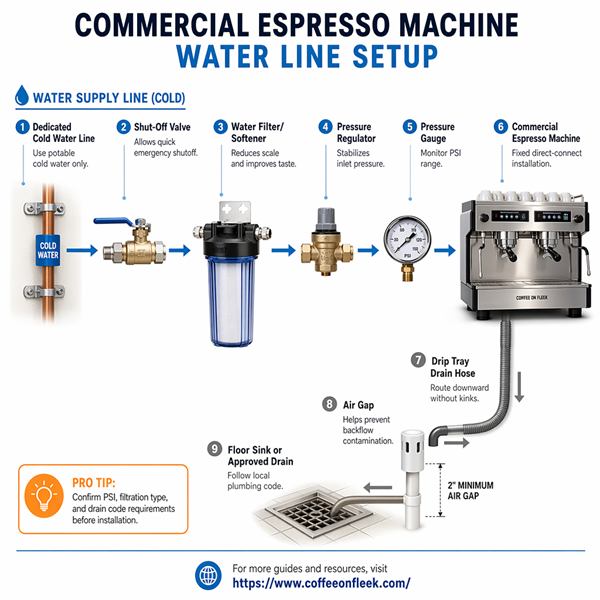
A proper water supply setup typically includes:
- Cold potable water line
- Shut-off valve
- Backflow prevention if required by code
- Water filtration system
- Water softening or scale control
- Pressure regulator
- Food-grade inlet hose
- Secure fittings
Avoid tapping into random sink lines without understanding flow rate and pressure. If your espresso machine shares water supply with a dishwasher, ice machine, or busy sink, pressure may fluctuate during service. Those fluctuations can affect espresso consistency and strain the pump.
Your plumber should confirm that the supply line can provide adequate flow while other equipment is operating.
Understanding Main Water Shut-Off Valves
Every commercial espresso machine installation should include a clearly accessible shut-off valve. In an emergency, staff must be able to stop water quickly.
There are usually two levels of shut-off to understand:
- Machine-specific shut-off valve
- Building or suite main water shut-off valve
This valve controls water going only to the espresso machine. It should be located close to the machine, often below the counter.
This valve controls water to a larger area or the entire business space.
Train managers and opening staff on where these valves are located. A small leak behind the espresso bar can become expensive if no one knows how to stop the water.
The shut-off valve is also useful for routine maintenance. Technicians may need to turn off water before replacing filters, servicing the pump, changing fittings, or moving the machine.
Label the valve clearly. In a busy café, no one should have to guess which valve controls the espresso machine.
Sizing Inlet Water Hoses and Fitting Types
The machine’s inlet hose must be food-safe, pressure-rated, and compatible with the manufacturer’s connection size. Many commercial espresso installations use braided stainless steel hoses or reinforced food-grade tubing. The exact fitting type depends on your machine and local plumbing setup.
Common considerations include:
- Hose diameter
- Thread type
- Compression fittings
- BSP vs. NPT threads
- Adapter requirements
- Food-grade material
- Pressure rating
- Length and routing
- Leak protection
Do not force mismatched fittings. Cross-threaded fittings can leak immediately or fail later under pressure. Also avoid using non-food-grade hoses, garden hose adapters, or temporary hardware-store improvisations.
The water line should be long enough to allow service access but not so long that it coils excessively under the counter. Coiled tubing can trap debris, kink, or make leaks harder to detect.
If you are unsure about fitting types, provide your plumber or espresso technician with the machine’s installation manual before the appointment. This prevents delays and repeat service visits.
Water Filtration and Pressure Regulation
Water quality is one of the most important parts of commercial espresso machine installation. Poor water can ruin espresso flavor, clog internal pathways, create scale, damage boilers, and shorten the life of expensive components.
For a small café, water treatment is not optional. It is part of protecting your equipment investment.
Why Commercial Espresso Machines Require Water Softening
Most tap water contains minerals such as calcium and magnesium. These minerals affect flavor and can form scale inside the espresso machine when heated. Scale buildup reduces heating efficiency, blocks valves and tubes, causes temperature instability, and may lead to costly repairs.
Water that is too hard can damage the machine. Water that is too pure or aggressive can also cause problems, including corrosion and flat-tasting espresso. The goal is balanced water: enough mineral content for good flavor, but controlled hardness to prevent scale.
A commercial espresso water filtration system may include:
- Sediment filtration
- Carbon filtration
- Scale inhibition
- Ion exchange softening
- Blending valves
- Reverse osmosis with remineralization in some cases
The best system depends on your local water test. Do not choose a filter only by brand or price. A café in a hard-water city needs a different solution than a café with soft but chlorinated water.
Before installation, test for:
- Total hardness
- Carbonate hardness or alkalinity
- Total dissolved solids
- Chlorine or chloramine
- pH
- Iron or sediment issues
Many espresso equipment suppliers can test your water or recommend a local provider. Your machine’s warranty may also specify acceptable water quality ranges. Keep water test results and filter installation records for future warranty support.
Installing a Water Pressure Regulator for Consistent Extraction
Water pressure affects the espresso machine’s fill system, pump performance, and shot consistency. If incoming pressure is too high, it can stress valves and fittings. If it is too low, the pump may struggle to maintain stable operation.
A water pressure regulator helps maintain a controlled inlet pressure before water reaches the machine. This is especially important in commercial buildings where pressure may vary throughout the day.
A complete water treatment path often looks like this:
Cold water line → shut-off valve → filtration/softening system → pressure regulator → espresso machine inlet
Some systems may place the regulator before the filter, depending on the equipment design and plumber’s recommendation. The important point is that pressure must be controlled according to the machine manufacturer’s requirements.
Pressure regulation also supports consistent espresso extraction. While the machine’s pump generates brewing pressure, stable inlet pressure helps the system operate predictably.
Monitoring Optimal PSI Ranges for Commercial Systems
Commercial espresso machines generally require inlet water pressure within a defined range, often around 30 to 60 PSI, though the exact requirement varies by manufacturer and model. Always check the installation manual for your specific machine.
If pressure is too high, you may see:
- Leaking fittings
- Valve stress
- Excessive wear
- Water hammer
- Dripping from safety or expansion points
If pressure is too low, you may experience:
- Slow boiler fill
- Pump noise
- Error messages
- Inconsistent brewing
- Reduced performance during rush periods
Install a pressure gauge where it can be checked easily. This gives staff or technicians a quick way to diagnose problems. If the machine suddenly behaves differently, pressure is one of the first things to inspect.
Water pressure can change after filter replacement, plumbing work, or city water adjustments. Make pressure checks part of your maintenance routine, especially if your café operates in an older building.
Drain Line and Waste Water Configuration
A commercial espresso machine produces wastewater throughout the day. The drip tray collects group head rinses, backflush water, steam wand purge water, and general barista cleanup. This waste needs to drain safely and legally.
Poor drainage creates messy counters, odors, sanitation problems, and potential health code violations.
Setting Up the Espresso Machine Drip Tray Drain Hose
Most direct-connect commercial espresso machines include a drip tray drain outlet. A drain hose carries wastewater from the machine to an approved drain location.
The drain hose should be:
- Foodservice appropriate
- Correctly sized for the machine outlet
- Securely attached
- Routed without kinks
- Sloped downward
- Easy to inspect
- Protected from crushing
- Connected according to local code
Avoid sharp bends directly under the drip tray. Coffee grounds and milk residue can accumulate in low points or kinks, causing slow drainage and odors.
The hose should be checked regularly. Even with good routing, espresso waste contains oils, fine coffee particles, and cleaning chemicals. Over time, buildup can restrict flow.
During daily cleaning, staff should flush the drip tray with water to help keep the drain line clear. However, flushing does not replace proper installation.
Open Site Drains vs. Floor Sinks: Local Plumbing Codes
Drain requirements vary by location. In many commercial foodservice environments, wastewater from equipment must drain indirectly into an approved receptor, such as a floor sink or open site drain, with an air gap. The purpose is to prevent sewage or contaminated water from backing up into the machine.
Common drain options include:
- Floor sink
- Open site drain
- Indirect waste receptor
- Under-counter drain receptor
- Dedicated plumbing drain approved by code
You should not assume that running a hose into a nearby sink, bucket, or sealed pipe is acceptable. Health departments and building inspectors may have specific requirements for espresso bars.
An air gap is often required between the drain hose and the drain receptor. This means the hose does not sit submerged in wastewater. The gap helps prevent backflow contamination.
Before construction, ask your plumber or local authority what is required. It is much easier to install the correct drain during buildout than to retrofit after inspection.
Maintaining the Proper Drain Hose Downward Slope
Gravity drainage depends on slope. If the hose runs uphill, lies flat, or dips below the drain before rising again, wastewater can collect in the line. This leads to slow draining, odors, clogs, and messy overflow.
A proper drain route should:
- Move continuously downward from machine to drain
- Avoid loops and low spots
- Avoid long horizontal runs
- Stay clear of heat sources
- Remain accessible for cleaning
- Be secured so it does not shift during service
If the floor drain is too far away, your plumber may need to design a better waste route. Long drain hose runs are more likely to clog and may violate code.
Do not hide the drain hose permanently behind sealed cabinetry without access. If the line clogs during a morning rush, staff or technicians need to reach it quickly.
Hiring Professionals vs. DIY Installation
Some café owners are comfortable assembling furniture, setting up grinders, or connecting small appliances. A commercial espresso machine installation is different. It involves water pressure, drainage, electrical load, food safety, and warranty documentation.
A DIY approach may seem cheaper, but one leak, electrical problem, or warranty denial can cost far more than professional installation.
When to Call a Licensed Commercial Plumber
You should call a licensed commercial plumber if your installation requires any new water line, drain line, valve, backflow prevention device, floor sink, or code-compliant indirect waste setup.
A plumber can help with:
- Installing a dedicated cold water supply
- Adding shut-off valves
- Connecting filtration systems
- Installing pressure regulators
- Verifying water pressure
- Routing drain lines
- Meeting local plumbing code
- Preventing leaks
- Preparing for health inspection
Commercial plumbers understand that foodservice installations must meet higher standards than residential appliance hookups. They can also coordinate with your general contractor during a café buildout.
If you are leasing a space, ask your landlord whether plumbing modifications require approval. Many commercial leases restrict unapproved plumbing work.
Finding Certified Commercial Espresso Technicians
A plumber handles the building water and drain infrastructure. An espresso technician handles machine-specific setup, testing, calibration, and startup.
A certified or experienced commercial espresso technician can:
- Inspect the machine after delivery
- Confirm proper water connection
- Check pump operation
- Verify boiler fill
- Test brewing pressure
- Check steam pressure
- Inspect for leaks
- Confirm volumetric programming
- Review cleaning procedures
- Document installation for warranty
For a machine like the Nuova Simonelli Appia Volumetric 1 Group, working with an authorized or experienced technician is especially valuable. Volumetric machines may need programming and calibration so shot buttons dispense the correct volume consistently.
Ask your equipment supplier whether they provide installation, recommend local technicians, or require authorized service for warranty protection.
When choosing a technician, ask:
- Are you certified by the manufacturer or distributor?
- Do you service this brand regularly?
- Can you install and calibrate volumetric machines?
- Do you provide installation documentation?
- Do you offer emergency service?
- What is your response time for café customers?
A good service relationship is worth establishing before opening day. When your espresso machine is central to revenue, downtime is expensive.
Budgeting for Professional Installation and Service Costs
Installation costs vary by city, building condition, machine type, and how much plumbing already exists. A simple replacement installation may be relatively inexpensive. A new café buildout requiring water lines, drains, electrical work, filtration, and inspection can cost significantly more.
Budget categories may include:
- Licensed plumber labor
- Electrical work or circuit upgrades
- Water filtration system
- Pressure regulator
- Fittings, valves, hoses, and gauges
- Drain installation
- Espresso technician startup
- Water testing
- Permit or inspection fees
- Future filter replacement
- Preventive maintenance visits
Do not spend your entire equipment budget on the machine alone. A commercial espresso machine is only as reliable as the infrastructure supporting it.
As a practical planning step, ask your equipment supplier for a pre-installation specification sheet. Give that document to your plumber, electrician, and contractor before they quote the work. This reduces miscommunication and helps everyone prepare the site correctly.
Next Steps: Post-Installation and Daily Maintenance
Once your commercial espresso machine is installed, the work is not finished. Proper daily maintenance keeps the machine reliable, protects espresso flavor, and extends equipment life.
After installation, your technician should walk your team through basic operating and cleaning procedures. For a volumetric machine, staff should also understand how programmed shot buttons work and when they may need recalibration.
Create a daily maintenance checklist that includes:
- Purging the group head
- Wiping and purging steam wands
- Cleaning the drip tray
- Emptying and cleaning the knock box
- Backflushing according to manufacturer instructions
- Soaking portafilters and baskets
- Checking for leaks under the counter
- Monitoring water pressure gauge
- Recording filter replacement dates
- Assigning staff responsibility for closing tasks
In our guide to Best Commercial Espresso Machines for Small Businesses, it highlights maintenance practices such as daily backflushing and assigning staff responsibility, this is where installation connects to long-term performance. Even a top pick like the Nuova Simonelli Appia Volumetric 1 Group will only perform well if it is installed correctly and maintained consistently.
Before opening day, run several test service periods. Make espresso, steam milk, flush the group head, clean the station, and watch how water and drainage behave under realistic use. Look for leaks, slow drainage, pressure changes, or awkward workflow issues.
A smooth installation gives your café a stronger start. With the right plumbing, filtration, pressure regulation, drainage, and professional support, your commercial espresso machine can deliver consistent drinks through morning rushes, weekend bakery traffic, and daily service without unnecessary downtime.