Coffee On Fleek

The Best Coffee Stop on the Internet

  • Coffee On Fleek
  • Top Espresso Machines
    • Super Automatic Espresso Machines
    • Commercial Espresso Machines for Small Businesses
    • Semi-Automatic Espresso Machines
    • Home Espresso Machines
    • Best Fully Automated Espresso Machine for Office Use
    • Best Italian Espresso Machines
    • Espresso Machines Tested
  • By Brand
    • Jura Reviews
      • Jura E8
      • Jura GIGA 6 review
      • Jura D6 Review
      • Jura WE8 Review
      • Jura Impressa C65 Review
      • Jura Impressa XS90 One Touch Automatic Review
      • Jura J95 Carbon One Touch Review
      • Jura Giga W3 Professional Review
      • Jura GIGA 5 Review
      • Jura Impressa Z9 One Touch TFT Review
      • Jura Z6 Machine Review
      • Jura Impressa J9 One Touch TFT Review
      • Jura Impressa F50 Review
      • Jura Impressa F8 TFT Review
      • Jura Impressa C60 Automatic Review
      • Jura Impressa A9 One Touch Review
      • Jura ENA Micro 9 One Touch Review
      • Jura Impressa F7 Espresso Machine Review
      • Jura C9 One Touch Automatic Review
      • Jura Giga X7 Professional Review
      • Jura ENA Micro 1 Automatic Review
      • Jura Impressa XJ9 Automatic Coffee Machine Review
    • Gaggia Reviews
      • Gaggia Brera Review
      • Gaggia Babila Espresso Machine Review
      • Gaggia Anima Prestige vs. Deluxe vs Super
      • Gaggia Cadorna Prestige vs Milk vs Barista Plus
      • Gaggia Cadorna Prestige Super Automatic Espresso Machine review
      • Gaggia 1003380 Accademia Espresso Machine Review
      • Gaggia RI8263/47 Velasca Prestige Espresso Machine Review
      • Gaggia Anima Prestige Super Automatic Espresso Machine Review
      • Gaggia Anima Deluxe Coffee and Espresso Machine Review
      • Gaggia Anima Coffee and Espresso Machine Review
    • Delonghi Reviews
      • De’Longhi Magnifica Evo Automatic Espresso & Coffee Machine Review
      • De’Longhi ECAM35020W Dinamica Automatic Coffee & Espresso Machine Review
      • De’Longhi La Specialista Espresso Machine Review
      • Delonghi Eletta ECAM45760B Super Automatic Espresso Machine
      • DeLonghi ESAM3300 Magnifica Super-Automatic Espresso Coffee Machine Review
      • DeLonghi ECAM22110SB Compact Automatic Cappuccino, Latte and Espresso Machine Review
      • DeLonghi ECAM23260SB Magnifica Smart Espresso Maker
      • DeLonghi ECAM28465M Prima Donna Espresso Machine Review
      • DeLonghi ESAM3500.N Magnifica Digital Super-Automatic EspressoCoffee Machine Review
      • Delonghi ESAM5500B Perfecta Digital Super Automatic Espresso Machine Review
      • Delonghi ECAM23210SB Super Automatic Coffee Machine Review
      • DeLonghi Magnifica S ECAM23460S Digital Super Automatic Machine with Lattecrema System Review
      • DeLonghi Lattissima en550 Espresso Machine Review
      • DeLonghi EC702 15-bar pump Espresso Machine Review
      • DeLonghi EC680M Dedica 15-bar pump Espresso Machine Review
      • De’Longhi Nespresso Lattissima Pro Espresso Machine Review
    • Saeco Reviews
      • Saeco HD8927/47 PicoBaristo Super Automatic Espresso Machine Review
      • Saeco Xelsis SM7684/04 Super Automatic Espresso Machine Review
      • Saeco HD8924/47 PicoBaristo Automatic Milk Frother Espresso Machine Review
      • Saeco Xsmall Vapore HD8645/47 Superautomatic Espresso Machine Review
      • Saeco Intelia Deluxe Cappuccino HD8771/93 Superautomatic Espresso Machine Review
      • Saeco HD8930/47 Royal One Touch Cappuccino Automatic Espresso Machine Review
      • Saeco HD8917/47 Incanto Carafe Super Automatic Espresso Machine Review
      • Saeco HD8911/47 Incanto Classic Milk Frother Espresso Machine Review
      • Saeco Exprelia Evo HD885747 Super-automatic Espresso Machine Review
      • Saeco Intelia Deluxe HD8759/47 Superautomatic Espresso Machine Review
      • Saeco Pure HD8765/47 Superautomatic Espresso Machine Review
      • Saeco Intelia Cappuccino HD8753/87 Superautomatic Espresso Machine Review
      • Saeco Royal Cappuccino HD8930/01 Superautomatic Espresso Machine Review
    • Breville Reviews
      • Breville Barista Express vs Express Pro vs Express Impress
      • Breville Oracle Touch Espresso Machine Review
      • Breville BES980XL Oracle Review
      • Breville BES920XL Dual Boiler Review
      • Breville BES870XL Barista Express Review
      • Breville BES500BSS Bambino Plus Espresso Machine Review
      • Breville BES840XL/A the Infuser Review
      • Breville ESP8XL Cafe Roma Review
    • Krups Reviews
    • Quick Mill Reviews
    • Miele Reviews
      • Miele CM 5000 Review
      • Miele CM 6310 Coffee System Review
      • Miele CM 6110 Coffee System Review
  • Top Cappuccino Machines
    • De’Longhi La Specialista Cappuccino machine
    • DeLonghi ECAM23260SB Magnifica Smart Cappuccino Maker
    • Breville BES870XL Barista Express
    • DeLonghi ESAM3300 Cappuccino Machine
    • Mr. Coffee Cafe Barista Cappuccino Maker
    • Nespresso Lattissima Pro by De’Longhi
    • Keurig K-Cafe Single Serve Cappuccino Maker
    • Breville BES920XL Cappuccino Maker
  • Best Coffee Grinders
    • Best Single-Dose Burr Coffee Grinders for Espresso
  • Contact Us
    • About Us
    • Contact Us
    • Affiliate Disclosure Policy
    • Privacy Policy
    • Disclaimer

December 17, 2022 By CoF Barista

How to choose your espresso drinks

As the popularity of great coffee shops has rapidly increased in the past few years, the creativity of the baristas in the tastes and sophistication of those of us who drink their beverages has similarly increased. Menus have grown longer and more complex. So, when I walk into a Starbucks or other favored coffeehouse, what should I choose off the lengthy menu?

The most tasty and popular drinks to order include Latte, Macchiato, Latte Macchiato, Cappuccino, Mocha, and Flat White. Understanding what it is that differentiates these drinks may help you choose among them and to broaden your tastes. While these drinks are in some ways all very similar, including espresso, steamed milk, and milk foam, the ratios of these ingredients in the order in which they are included is important.

Since all of these beverages are based on espresso, let’s talk a little bit about what espresso is.

What is Espresso?
what-is-espresso

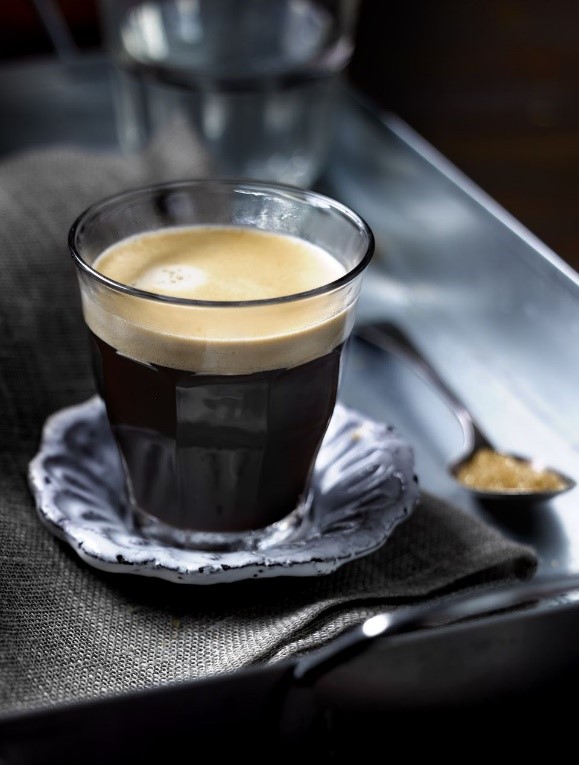
Espresso is from the word esprimere, “to express” or “to force out”. Espresso is coffee brewed by forcing very hot water under high pressure through finely ground coffee beans. The act of forcing the water through the coffee beans at high pressure creates a beverage (or “shot”) that is thicker than normal coffee and contains more dissolved and suspended solids than normal coffee. This is, in turn, produces a stronger, bolder flavor which is quite concentrated. Because of the pressurized brewing process, the flavors and chemicals in a typical cup of espresso are very concentrated. Espresso can be consumed as is (perhaps with a bit of crema) or used as the base for other drinks such as Latte, Macchiato, Latte Macchiato, Cappuccino, Mocha, and Flat White. In these other drinks, typically what changes is the ratio of milk to espresso, the order in which ingredients are added, and the quality and amount of the foam on top of the drink. It may be worth noting that although espresso has a higher concentration of caffeine than most coffee beverages, the typically smaller serving size surprisingly results in less total caffeine than a typical mug of dirt brewed coffee.

So now we have espresso; what are some of these other, more exotic drinks?

What is a Macchiato?
what-is-Macchito

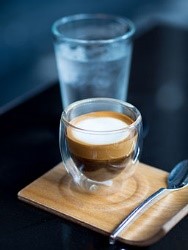
A macchiato (or caffè macchiato) is basically a shot of espresso with a little bit (perhaps 1 to 2 teaspoons) of hot milk. Macchiatos have the highest ratio of espresso to milk of any drink made with those ingredients. In a macchiato the milk is intended to moderate the taste of the coffee with barely a touch of sweetness. Typically, a macchiato is prepared by pouring a small amount of steamed milk directly into a single shot of espresso. In fact, Macchiato means “stained” in Italian– espresso stained by a little bit of milk.

You might also like to read: What is a Cortado?

Starbuck’s® caramel macchiato has created its own followers of this tasty beverage. This delicious Macchiato begins with steamed milk topped by a dense, creamy foam. It also contains vanilla syrup. Then espresso is poured over and through the foam, where it mixes with the milk and creates a brown mark on top. Then the barista adds a crosshatch of sweet caramel sauce to the top of the foam (Starbucks’ signature pattern, but obviously the shape of the pattern does not affect the taste). You will find several copy-cat recipes on line, but they all basically make a standard caramel sauce and drizzle that sauce over a standard macchiato.

Similarly, Starbuck’s® iced caramel macchiato has become quite popular as a hot-weather drink. An iced caramel macchiato is basically a standard macchiato poured over ice and topped with a drizzle of caramel.

What is a Latte?
what-is-latte

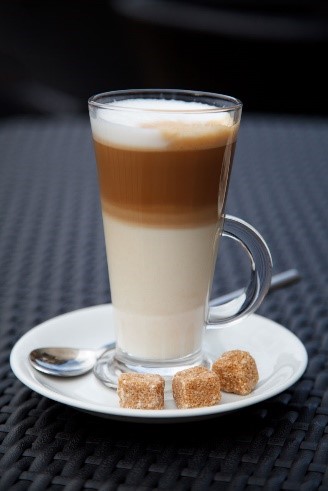
A latte is a coffee drink made with espresso and steamed milk. In Italy, caffè latte is almost always prepared at home and only for breakfast. The coffee is poured into a cup containing heated, unfoamed, unsweetened milk.

In the U.S. and elsewhere outside of Italy, a latte is typically prepared in an 8 oz. glass or cup starting with one shot of espresso. The glass is then filled with steamed milk with approximately a ½ inch layer of foamed milk on the top. We also tend to substantially sweeten our lattes (unlike Italy and the rest of Europe). And we certainly don’t limit the consumption of lattes to breakfast!

We also are fond of substituting ingredients in lattes. For example, it is common to substitute chai tea for espresso to make a chai latte (a drink that is easy to make at home on your stovetop). It is also not unusual to utilize soymilk or almond milk in place of cow’s milk. Lattes have become tasty and social drinks to be consumed any time.

Starting in the early 2000’s, Starbucks® successfully introduced lattes taste themed to certain holidays. Following this successful introduction, Starbucks made popular the pumpkin spice latte. The Pumpkin Spice Latte is an espresso drink made with steamed milk and topped with whipped cream and pumpkin pie spice and a small amount of pumpkin puree. The pumpkin spice latte is offered by Starbucks® and many other coffee shops through the fall season up until the end of December.

Similarly, Starbucks® introduced the cascara latte in 2017. This latte combines espresso, steamed milk, and cascara syrup, topped with foam. The beverage is topped with a sprinkling of cascara cherry extract mixed with cane sugar. Cascara syrup is made from the skins of the cherries from which coffee beans are extracted.

What is a Cappuccino?
what-is-cappuccino

A cappuccino is an espresso-based coffee drink that, like many of our current coffee shop beverages, originated in Italy. It is traditionally prepared with a double espresso and steamed milk foam. Some baristas will use cream instead of milk, and some will further flavor the drink with chocolate powder or cinnamon.

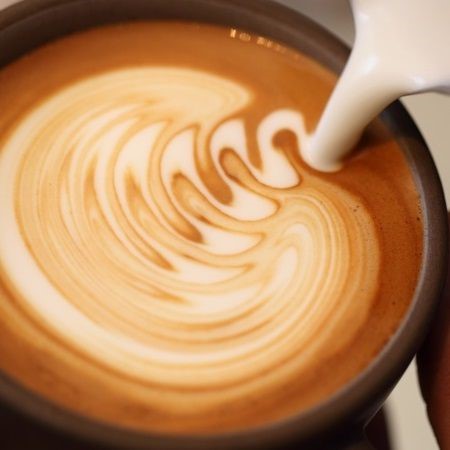
In a modern cappuccino, the temperature and texture of the milk are as important as the double espresso shot. When a barista steams the milk for a cappuccino, he or she will create a microfoam by introducing very tiny bubbles of air into the milk. The microfoam is important and gives the milk a velvety texture. The foam produced by steaming the milk is quite critical to this drink, thus making the cappuccino one of the most difficult espresso-based beverages to make properly. And we’re all use to seeing skilled baristas producing artistic shapes while pouring the milk on top of a cappuccino or other drink.

The traditional way of preparing a cappuccino is by using the equal ratios of ⅓ espresso, ⅓ steamed milk, and ⅓ milk foam. Alternatively, we now see cappuccinos served with elaborate decorative art produced by the textured milk at the hands of a skilled barista, producing a beverage to be enjoyed both with your palate and with your eyes.

Be sure to check out our article on Espresso Machine vs Cappuccino Machine. The automatic cappuccino machines will produce your favorite cappuccino at the touch of a button.

Latte vs Cappuccino

What is the difference between a cappuccino vs a latte? Both use the same basic ingredients, the difference are:

  • Cappuccino is an espresso based drink with the basic ratio of 1/3 espresso, 1/3 steamed milk, and 1/3 wet foamed milk.
  • Conversely, a latte is basically a milk drink with a little coffee in it.
  • A cappuccino is a strong espresso with milk while a latte has proportionately much more milk.

What is a Mocha?
what-is-mocha

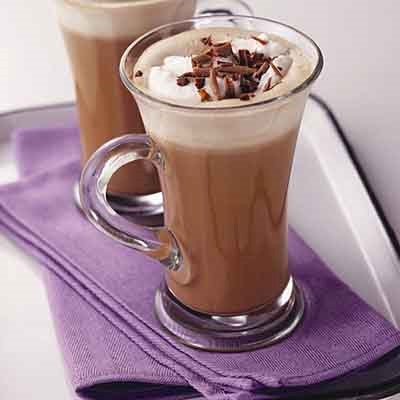
A mocha (or caffè mocha) is a combination if espresso and hot milk (like a latte and similar drinks), but with the addition of chocolate. The added chocolate may be in the form of sweet cocoa powder or chocolate syrup.

You can think of a mocha basically as hot chocolate with a shot of espresso added. Mochas are usually served either with a distinctive milk froth or whipped cream on top. For reasons of both the presentation and taste, it is common to have the top decorated with chocolate powder, chocolate flakes, cinnamon, or other flavors. A mocha can also be made with white chocolate, called a white mocha or with a blend of both white and dark chocolate, which goes by a variety of names including tuxedo mocha, black and white mocha, zebra, marble mocha, tan mocha, etc.

What is a Flat White?
what-is-flat-white

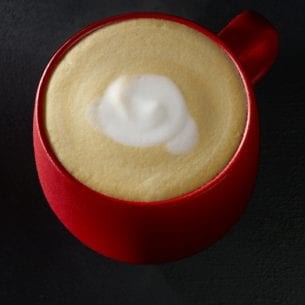
A flat white is similar to a latte but differs in the way the milk is treated. The essence of a flat white is that there is no milk froth or thick foam but only microfoam, which has a glossy or velvety consistency. The intent is that the espresso be the dominant flavor rather than the milk. A good flat white should have a well-developed thin layer of microfoam (crema) which is uniformly brown in color. Because of the use of microfoam, traditionally a flat white does not include latte art.

Starbucks generally produces a version of the flat white with “holiday spices” near Christmas.

So you have many options of great espresso beverages to try on your visits to your favorite coffee house.

Do you want to make an espresso drink at home? Check out our top-rated bean-to-cup espresso machines for home use. It is possible to be your own barista with some practice, and using an easy-to-use espresso machine.
Filed Under: Espresso Drinks

December 10, 2022 By CoF Barista

How to use a French Press?

As strange as it may seem, the French press actually was invented by an Italian designer named Attilio Calimani in 1929. The French press is often used for making coffee for a small group of people and for coffee enthusiasts who want to control the strength and flavor of their coffee.

Read on to find out what a French press is, how to use a French press at home, and what to look for when purchasing a French press.

French-press-coffee-maker

What is a French Press?

A French press, also known as a cafetière, coffee press, coffee plunger, or press pot, is a type of coffee maker used to brew coffee by steeping ground coffee beans in hot water and then separating the liquid from the grounds by pressing a mesh filter through the mixture.

A French press typically consists of a cylindrical pot with a metal or nylon mesh filter in the lid, a metal or plastic plunger that fits tightly in the cylinder and presses the grounds to the bottom, and a separate decanter.

French press is a full immersion method, which means that the coffee grounds are fully submerged in the water, which allows for a strong and rich extraction. French press brewing is considered a manual method and it’s very popular among coffee enthusiasts.

You might also like to read: Aeropress vs. French Press

How Does a French Press Work?

A French press works by steeping coarsely ground coffee beans in hot water and then separating the liquid from the grounds by pressing a mesh filter through the mixture. Here’s the general process:

The French press method allows for more control over the brewing process, making it possible to brew coffee to a specific strength and taste. The full immersion technique allows the coffee grounds to fully steep and extract their flavors into the water, resulting in a rich and full-bodied cup of coffee.

How to use a French Press step-by-step?

Here’s a step-by-step guide on how to use a French press:

  1. Start by heating water to around 200°F (93°C) and grind your coffee beans to a coarse grind.
  2. Assemble your French press by placing the metal or nylon mesh filter in the lid and inserting the plunger.
  3. Place the ground coffee in the bottom of the French press and pour the hot water over it.
  4. Stir the mixture and let it steep for 4 minutes.
  5. After 4 minutes, press the plunger down to the bottom of the pot, separating the liquid coffee from the grounds.
  6. Pour the brewed coffee into a cup or carafe and enjoy it.
  7. Clean the French press by disassembling it and rinsing the parts with hot water.

You can adjust the strength of the coffee by varying the amount of coffee you use, the brewing time, or the temperature of the water. As well you can adjust the ratio of coffee to water according to your preference.

Keep in mind that the French press is a full immersion method, which allows for a strong and rich extraction, but also can make the coffee taste bitter if left too long.

What features should I look for in a French Press?

When looking for a French press, there are several features to consider:

  1. Material: French presses can be made of glass, stainless steel, or ceramic. Some French Presses are made with insulated walls and will retain heat better in your coffee than devices with non-insulated walls, but you generally will serve the coffee in your French press immediately, so insulation may not be a significant issue for you. Glass can be fragile and can retain heat less well than the other materials. Stainless steel and ceramic are more durable and retain heat better.
  2. Size: French presses come in different sizes, from small individual presses to large presses that can make multiple cups of coffee. Consider how much coffee you typically need to make and choose a size accordingly.
  3. Plunger: Look for a French press with a sturdy and durable plunger that can press the coffee grounds to the bottom of the pot effectively.
  4. Filter: French presses come with metal or nylon mesh filters. Metal filters are more durable, but nylon mesh filters are more effective in trapping fine grounds.
  5. Insulation: Consider a French press with double-walled insulation to keep your coffee hot for longer.
  6. Design: French presses come in different designs and colors, so you can choose one that matches your kitchen decor.
  7. Brand reputation: Look for a well-known brand with a good reputation for quality and customer service.
  8. Easy to clean: Look for a French press that is easy to disassemble and clean, and is dishwasher safe.

By considering these features you will be able to find a French press that suits your needs and preferences.

Best French Press

Best Seller: BAYKA French Press Coffee Maker

BAYKA-French-press-coffee-maker

View Product on Amazon.com

The BAYKA French Press Coffee Maker is moderately priced, and made of high-quality materials, including borosilicate glass to resist the thermal shock of sudden temperature changes. With a specially thickened bottom to maintain temperature and with stainless steel or stainless steel and copper framework. Carafe holds a full 34 oz. of coffee and has 4 levels of filtration for superior flavor. Completely disassembles for easy cleaning.

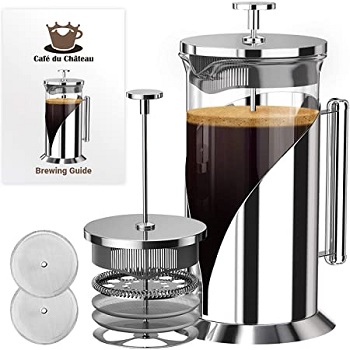
Best Warranty: Cafe Du Chateau French Press Coffee Maker

Cafe-Du-Chateau-French-press-coffee-maker

View Product on Amazon.com

Featuring a lifetime replacement policy, this Cafe Du Chateau French press has attractive modern styling executed in Stainless Steel and thermal shock resistant borosilicate glass. Included 4 levels of filtration. Surpasses al European Commission and U.S.F.D.A. food safety standards. 34 oz. carafe.

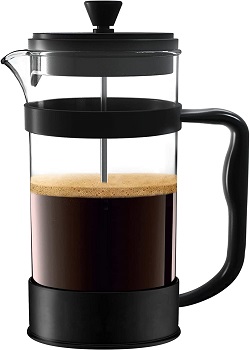
Most Affordable: Utopia Kitchen 34 Ounce French Press Espresso and Tea Maker

Utopia-Kitchen-French-press-coffee-maker

View Product on Amazon.com

The Utopia French press features a large 34 oz (1000 ml) heat resistant borosilicate glass carafe in an insulated plastic frame. Features a triple stainless-steel filter. Very affordably priced, this French press makes great coffee at an affordable price.

Final Thoughts

There are several reasons why a French Press might be the right choice for you.

  • Taste: French press coffee is known for its rich, full-bodied flavor. The long steeping time and the metal filter that allows the oils from the coffee beans to pass through, resulting in a stronger and more flavorful cup of coffee.
  • Control: French press gives you the control over how strong you want your coffee to be. You can adjust the steeping time, the water temperature and the grind size to suit your taste preferences.
  • Simplicity: A French press is very easy to use. You only need ground coffee and hot water to make a delicious cup of coffee.
  • Durability: The French press is made of durable materials such as glass, stainless steel or ceramic, which can last for a long time with proper care.
  • Cost effective: French presses are relatively inexpensive, and you don’t need to buy paper filters or pods, which can save you money in the long run.
  • Portable: French press is lightweight and easy to transport, making it a great option for camping, traveling, or enjoying coffee on the go.

Overall, the French press is a good option for those who want to make a delicious, full-bodied coffee at home, and want to have control over the brewing process.

FAQ’s

Q1: What is the right grind size for a French press?

The right grind size for a French press is a coarse grind. This allows the coffee grounds to be large enough to be trapped by the press filter, but small enough to release flavor into the water. A coarse grind is similar in size to coarse sea salt or coarse sand.

Q2: What the correct ratio of coffee to water in a French press?

The general rule of thumb for the ratio of coffee to water in a French press is 1:15. This means that for every 1 gram of coffee, you should use 15 grams of water. So, for example, if you are using 30 grams of coffee, you should use 450 grams of water (30 x 15 = 450).

However, this ratio can be adjusted to taste. You can experiment with different ratios to find the strength and taste that you prefer.

Q3: What is the best coffee to use in a French press?

The best coffee to use in a French press is a medium to dark roast, whole bean coffee.

French press brewing requires a coarse grind, which is best achieved with whole bean coffee. Medium to dark roasts have a stronger flavor profile and can stand up well to the full immersion brewing method of a French press. Whole bean coffee is also fresher than pre-ground coffee, which can lead to a better taste.

Additionally, you may consider using high-quality Arabica beans, which are known for their complex and nuanced flavor profile, rather than lower-quality Robusta beans. It also depends on personal preference you can experiment with different types of beans to find the one that you like best.

You might also like to read: Which coffee beans should I buy?

Q4: How long do you let coffee brew in a French Press before drinking it?

The recommended brew time for a French press is around 4 minutes. This allows the coffee grounds to fully steep and extract their flavors into the water. Once the 4 minutes have passed, you should press down the plunger to separate the coffee grounds from the liquid.

It is recommended to pour the coffee immediately after pressing it to avoid over-extraction which can make the coffee taste bitter.

Filed Under: Brewing Tips

November 17, 2022 By CoF Barista

What is decaf espresso?

What in the world is decaf espresso? Many would consider those two words used together as an oxymoron, but they’re really not! Decaf espresso, like regular decaf coffee, is made by removing most of the caffeine from the beans before they are ground and used to make coffee.

You might also like to read: What is espresso?

How much caffeine?

Many of us would think of espresso as a unique kind of coffee bean– but it’s really not! A shot of espresso can be made from many kinds of beans. And while espresso tends to have more caffeine per ounce than “regular coffee”, that really has more to do with the brewing process than with the coffee itself.

A single shot of espresso might have between 30 to 100 mg of caffeine. Surprisingly, your morning cup of coffee probably has around 96 mg of caffeine.

Normally your morning cup of coffee is made by slowly dripping water through unpacked ground coffee beans. Conversely, espresso machines use high pressure to pump hot water through a porta filter filled with a “puck” of compressed, friendly ground coffee.

Making a shot of espresso typically results in a coffee drink with concentrated caffeine. However, just like with regular coffee, there are ways to remove or drastically reduce the amount of caffeine and the resultant shot. The goal is to remove the caffeine without removing the taste or other attributes of the espresso.

Caffeine is typically removed from coffee beans with the use of a solvent of some sort–perhaps water, carbon dioxide or other organic solvents. These processes can remove about 97% of the caffeine and have minimal effect on the taste of the coffee drink. Many prefer processes using pure water to remove the caffeine rather than organic solvents.

Does Starbucks sell decaf espresso drinks?

Starbucks and many other coffeehouses sell decaf espresso drinks as well as decaffeinated coffee beans. Starbucks tends to have slightly more residual caffeine than some other beans. Research has shown a shot of decaffeinated espresso at Starbucks contains in the range of 3 to 15.8 mg per shot.

You might also like to read: How to choose the best coffee beans?

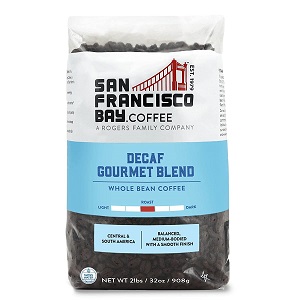
You can purchase decaffeinated beans for your espresso at your favorite coffee shop and many upscale markets. Or you can try some of our favorites:

View Product on Amazon.com

Conclusion

So back to the fundamental question: should you drink decaf espresso? The answer is “it depends”.

The reasons for choosing caffeinated or decaffeinated espresso are much the same as how you choose caffeinated or decaffeinated drip coffee. Are you trying to wake yourself up? Or are you trying to make sure you can go to sleep in an hour? How does your stomach react to caffeine? The choice is yours.

Filed Under: Coffee beans

November 12, 2022 By CoF Barista

How to clean and descale an espresso machine

You’ve shown yourself to be in the top few percent of espresso aficionados by purchasing an espresso machine that can make you the perfect cup of espresso anytime you want it. And you’ve spent your time to learn how to make that perfect drink.

But nothing can ruin that drink faster than a poorly maintained or poorly cleaned espresso machine. We find time spent caring and descaling for your machine to be very rewarding in the quality of the drinks produced.

Clean your machine regularly

Fortunately, newer fully automated espresso machines require less maintenance and have simplified cleaning compared to older machines. Also, most premium machines have a reminder mechanism to tell you when cleaning maintenance procedures are required.

Removing the oily residue

Although it may not seem like it, coffee beans have quite a bit of oil in them. While these oils are critical to the taste and body of the coffee you are drinking, those same oils have a propensity for coating the workings of your machine and attracting other impurities. So, it is important to regularly clean the parts of your coffee maker that come in contact with the coffee beans or grounds.

Make sure to consult your owner’s manual for the best method of cleaning, including identification of parts like the brew head that can be removed for easy cleaning.

Cleaning the milk system

Cleaning your milk system of your espresso machine is an obvious no-brainer. You don’t want dry, stale milk to contaminate tomorrow’s drinks. Espresso machines typically have a way to purge the belt system easily with hot water from the espresso machine.

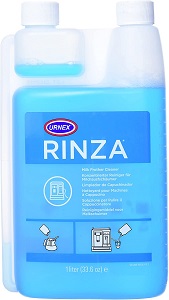
In addition to perjuring the milk system, there are several products for more aggressively cleaning the milk system. We generally use Rinza.

View Product on Amazon.com

Cleaning your grinder

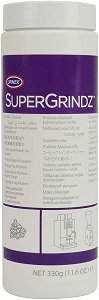
First, try to avoid overly oily beans. As previously mentioned, the oil will go to cup your whole machine and most especially the grinder. Make sure you follow the grinder instructions for your machine and consider using a product like Supergrindz periodically to keep your grinder functioning perfectly.

View Product on Amazon.com

Descaling

All water contains some dissolved minerals. Over time, those minerals can deposit the scale on the water passages of your machine. One way to minimize scaling is to use distilled water for your drinks, although that can be more expensive and a bit of a hassle. Some filters will also work to reduce the minerals in your water. However, you should expect that some descaling will be required.

Newer machines will have an indicator to show you when descaling is needed. Since the scale is fundamentally limestone, it can actually be removed with vinegar–but it becomes difficult to remove the remaining vinegar odor and after-taste.

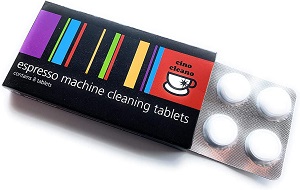
Again, read your owner’s manual. There are variety of products, often in the form of tablets, that you can run through your system to remove scale without leaving an aftertaste. For example, we use Cino Cleano tablets to descale our espresso machines.

View Product on Amazon.com

A clean machine will produce superb espresso; maintenance doesn’t take much time, but it makes your drink much better!

Filed Under: Espresso Machine 101

  • « Previous Page
  • 1
  • …
  • 5
  • 6
  • 7
  • 8
  • 9
  • Next Page »

Affiliate Disclosure

Coffeeonfleek.com is a participant in the Amazon Services LLC Associates Program, an affiliate advertising program designed to provide a means for sites to earn advertising fees by advertising and linking to Amazon.com.

We truly appreciate the support, if you decide to buy using our affiliate links. It helps us keep the site going and to continue providing you with awesome content!

Recent Posts

  • Are Super-Automatic Espresso Machines Worth It?
  • How Long Do Super-Automatic Espresso Machines Last
  • Finding Your Perfect Roast: A Guide to Choosing Coffee Beans for Every Drink
  • Iced Coffee Perfection: Beat the Heat with This Refreshing Summer Drink
  • Ethiopian coffee

Useful Pages

  • Reviews
  • Reviews By Brand
  • About Us
  • Contact Us
  • Privacy Policy
  • Disclaimer
  • Facebook

Copyright © 2026 - ZIZZ, LLC. ALL RIGHTS RESERVED